
Database
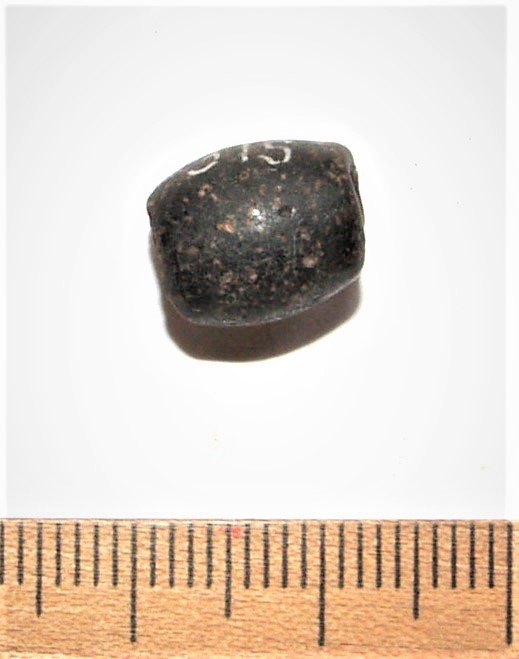
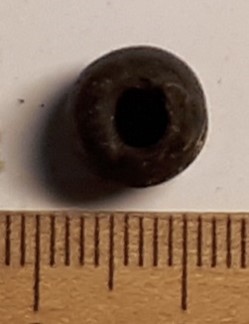
Bead.
Valjala hillfort
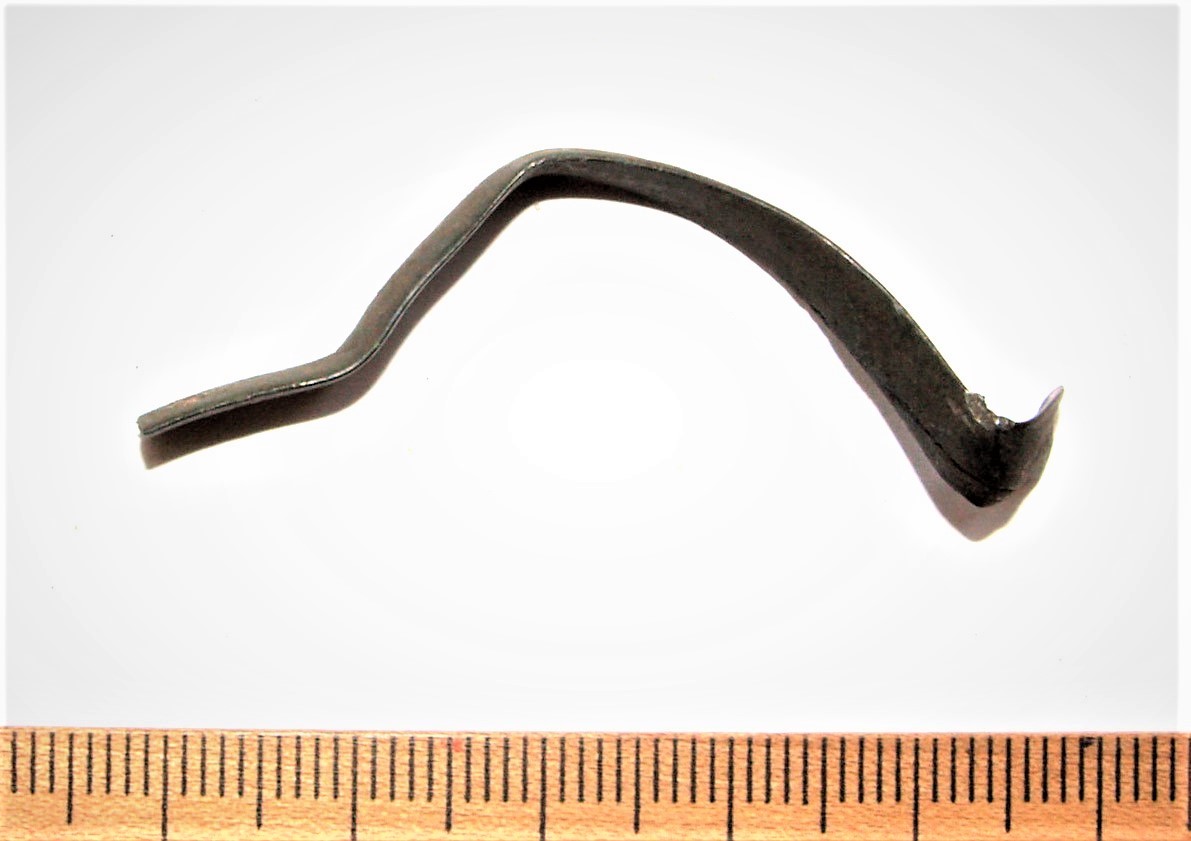
Bronze lace.
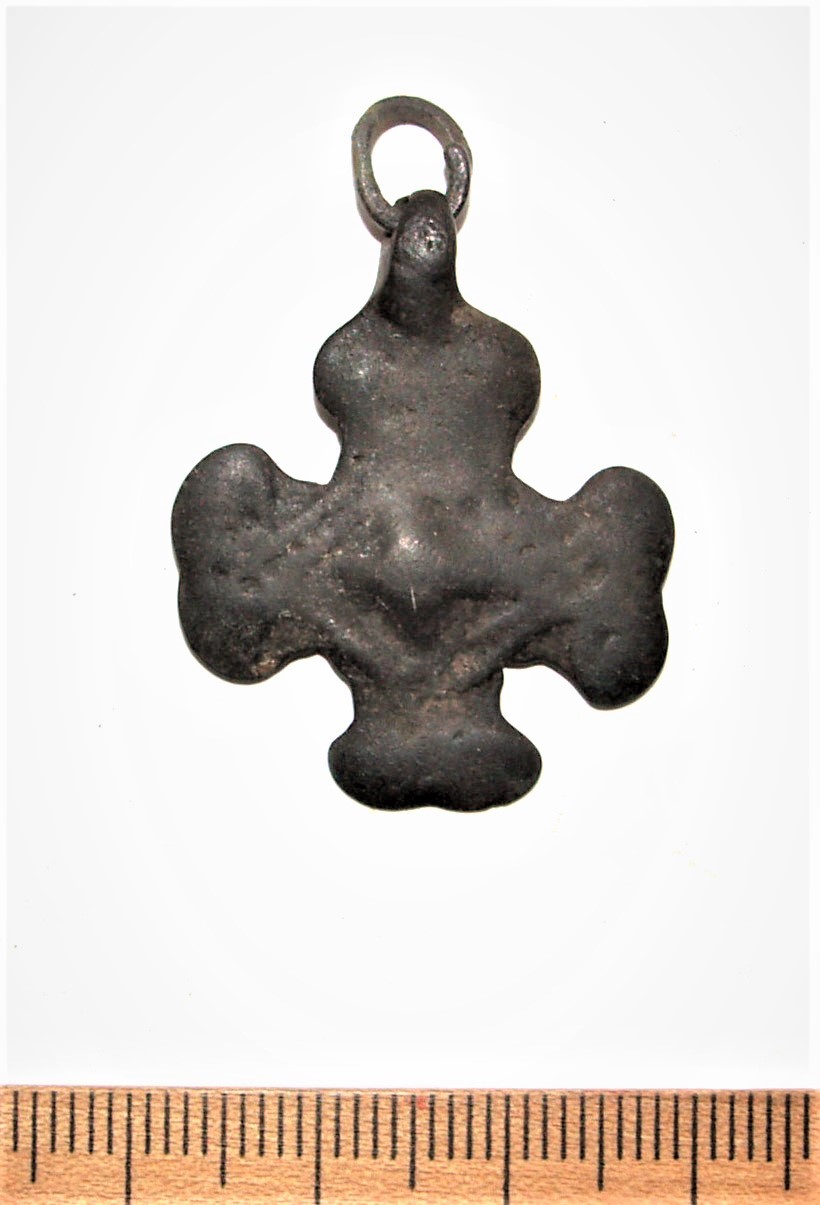
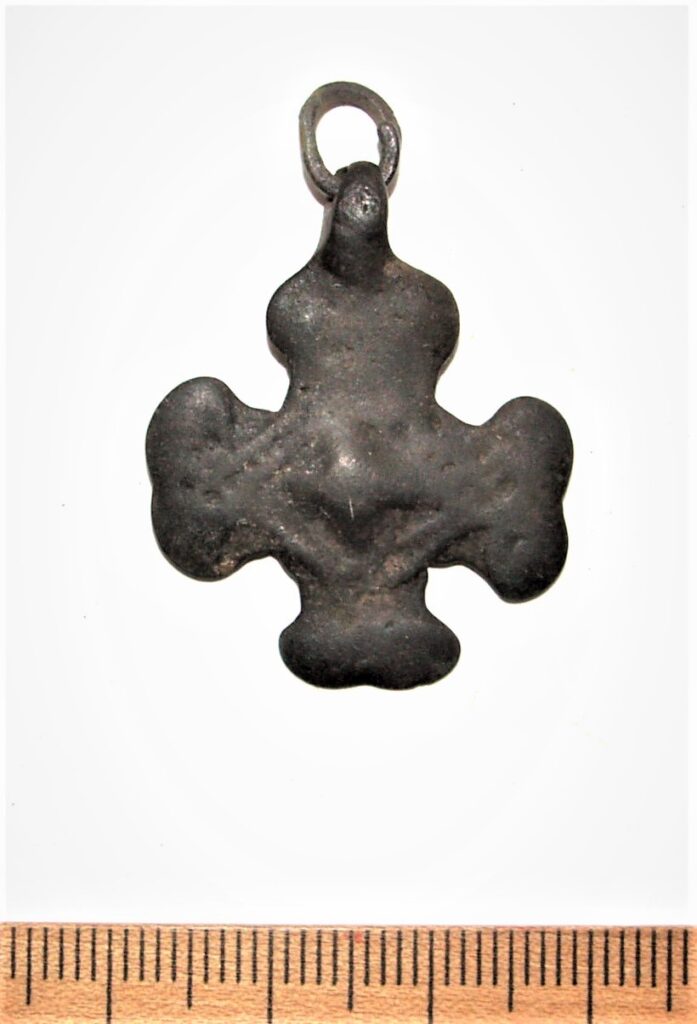
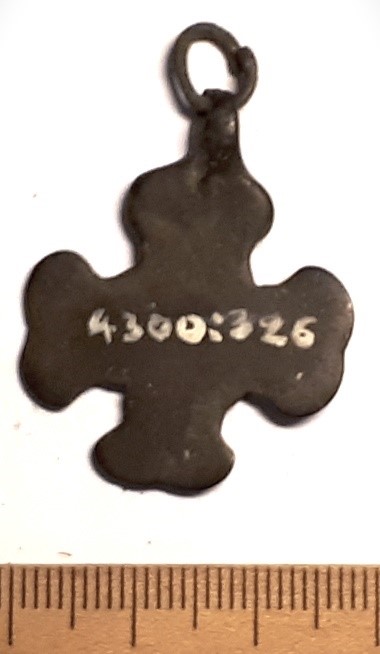
Cross-shaped pendant. According to Tuuli Kurisoo’s classification subtype B1.5.1 that have, among othrs, been found from Pada inhumation cemetery of mainly the 13th century (e. g. grave XXV). Unusual subtype that has presently only been found in Estonia (Kurisoo 2021, 62-63).
Literature:
Kurisoo, T. 2021. Adornment, self-definition, religion: Pendants of the north-eastern Baltic Sea region, 9th-13th century. Studien zur Siedlungsgeschichte und Archäologie der Ostseegebiete, Band 19. Hamburg: Wachholz.
Valjala hillfort
Penannular brooch with faceted terminals, copper alloy.
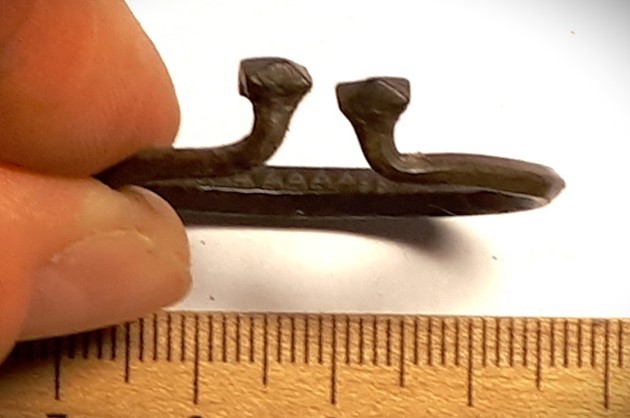
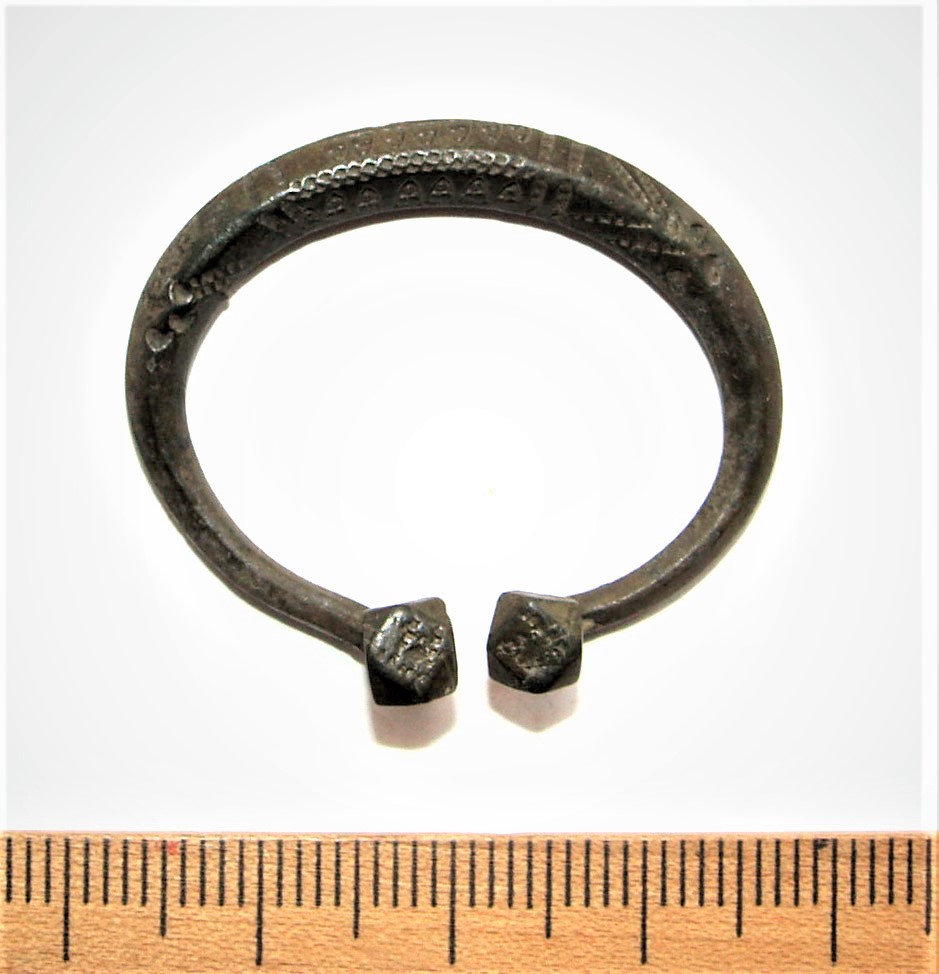
Penannular brooch with faceted terminals, copper alloy, decorated. Widespread type in Estonia, mainly in the 12th century.
Literature:
Pauts, H. 1997. Pahaga hoburaudsõled Eestis. (Töid ajaloo alalt, I.) Eesti Ajaloomuuseum, Tallinn, 79-115.
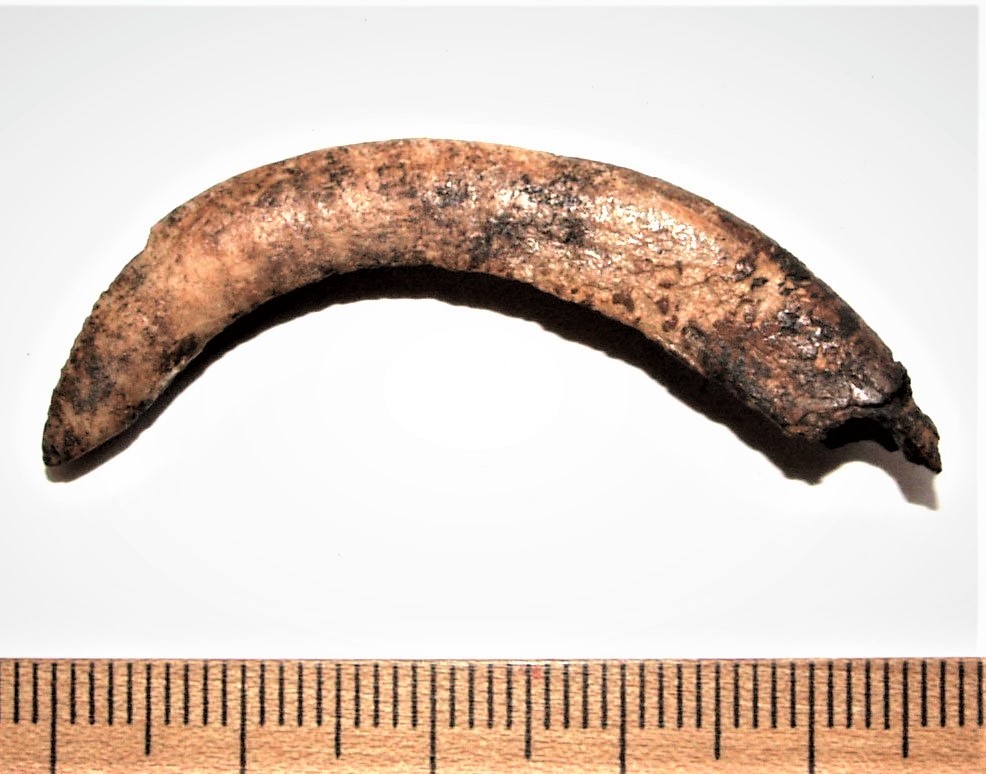
Tooth pendant.
Literature:
Luik, H. 2004. Luuesemed hilisrauaaja linnamägedel Lõhavere, Soontagana, Varbola ja Valjala leidude põhjal. – A. Haak, E. Russow, A. Tvauri (Toim.). Linnusest ja linnast: uurimusi Vilma Trummali auks = About hillfort and town: studies in honour of Vilma Trummal (157−188). Tallinn, Tartu: Eesti Teaduste Akadeemia Kirjastus. (Muinasaja teadus; 14). Read the article (ENG conclusion p. 185-188): here.
Valjala hillfort
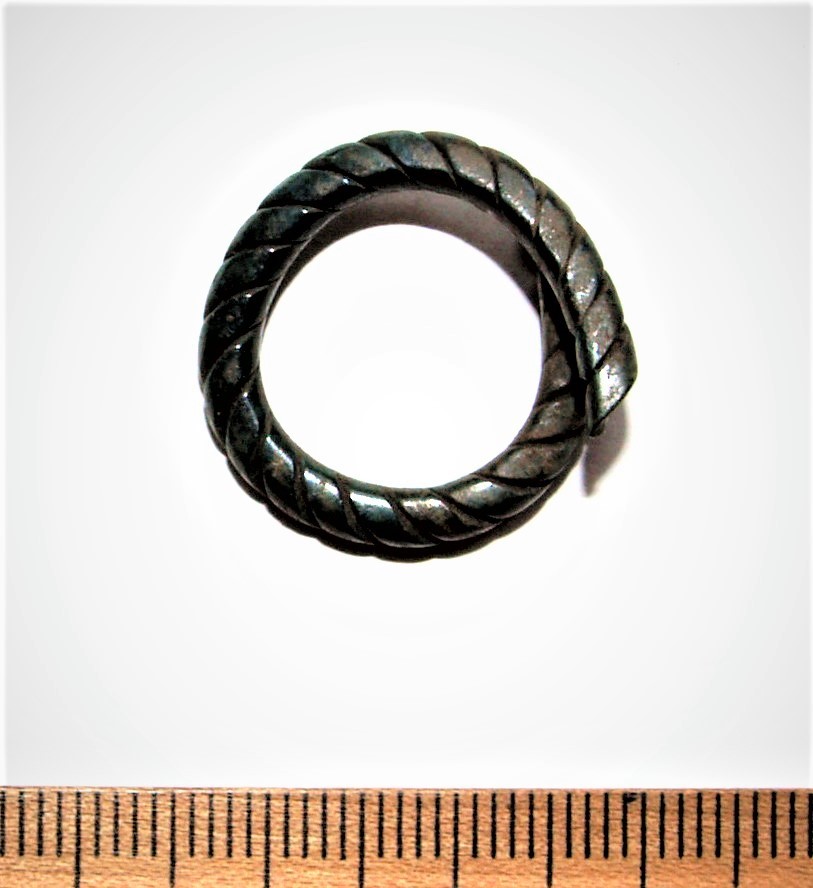
Fragment of a bronze bracelet, re-made as a finger-ring (?).
Bracelet, bronze. Bracelets made of multiple twisted wires have been dated to the 12th and 13th centuries and are mainly found in mainland Estonia, especially in Northern Estonia (Valk & Laul 2014, 118). Bracelets of this type were also widespread in the territories of the Votes and Izhorians as well as in Novgorod (Mägi 2002, 106). Since such bracelets occur mainly in inhumation graves and only seldom in cremations, they were probably taken into use in the very end of the 12th century.
Literature:
Mägi, M. 2002. At the Crossroads of Space and Time. Graves, Changing Society and Ideology on Saaremaa (Ösel), 9th–13th centuries AD. CCC papers: 6. Gotland University College, Centre for Baltic Studies; Institute of History, Department of Archaeology. Tallinn, 2002. Read the book: here. Look at the drawings of the archaeological excavations: here.
Laul, S., Valk, H. 2014. Siksälä kalme, I. Muistis ja ajalugu. Tartu ülikool: Tartu.
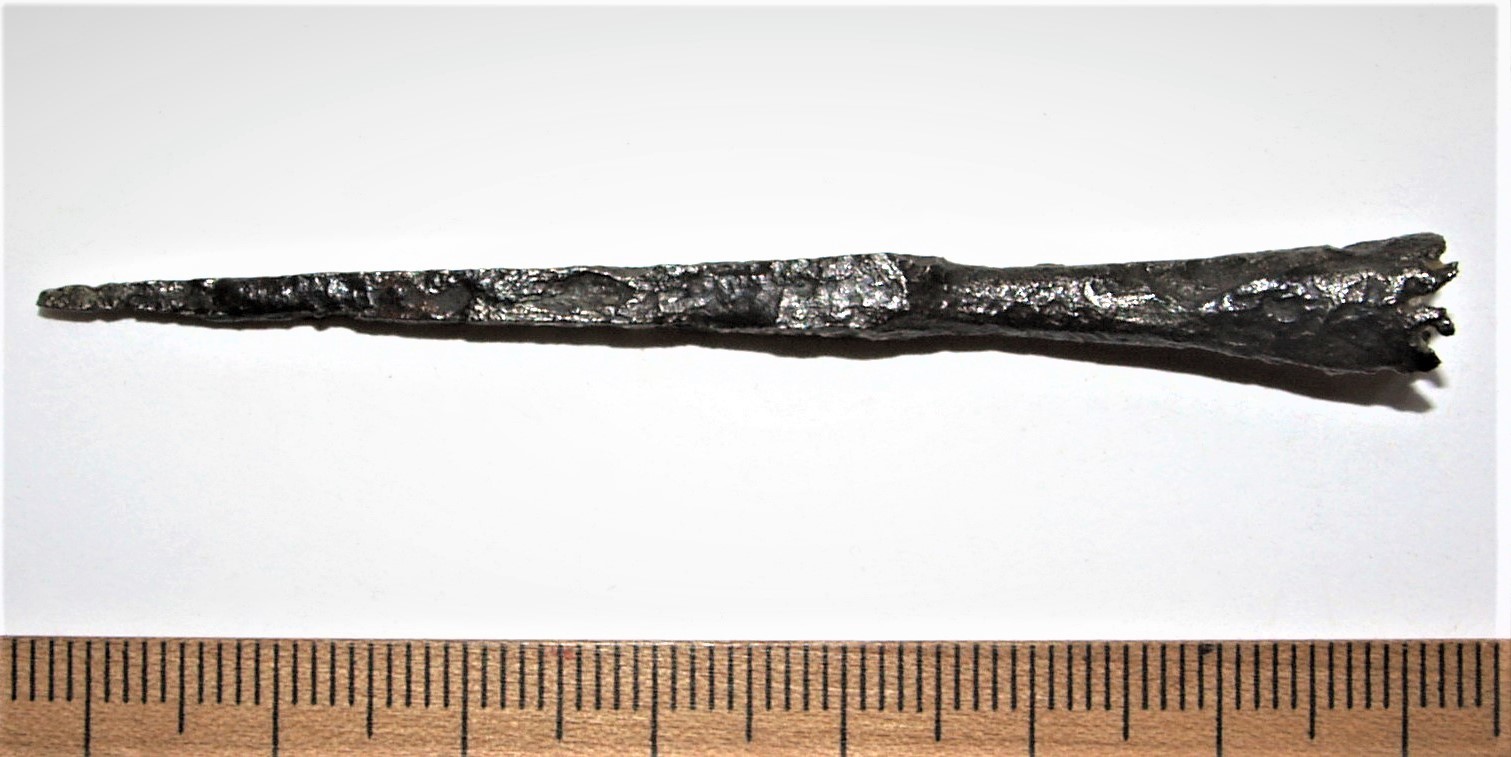
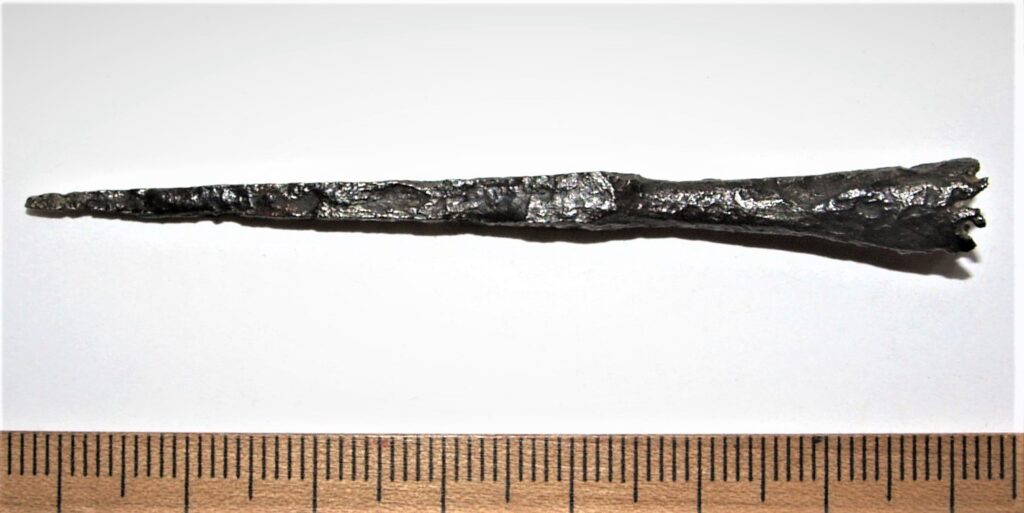
Crossbow bolt, iron. Crossbow bolt with a pyramid-shaped tip. The bolt has a wider part at the base, just before the socket. Mäesalu´s type A I Crossbow were taken into use in the Eastern Baltic as early as in the end of the 12th century, but heads of such type are in Estonia dated mainly to the first half of the 13th century (Mäesalu 1991). In Latvia they are datef from the end of the 12th century to the early 14th century (Mugurēvičs 2008, 202).
Literature:
Mäesalu, A. 1991. Otepää linnuse ammunooleotsad. Eds. L. Jaanits & V. Lang. (Muinasaja teadus, 1). Agu, Tallinn.
Mugurēvičs, Ē. 2008. Viduslaiku ciems un pils Salaspils novadā. Rīga, 112, 202.
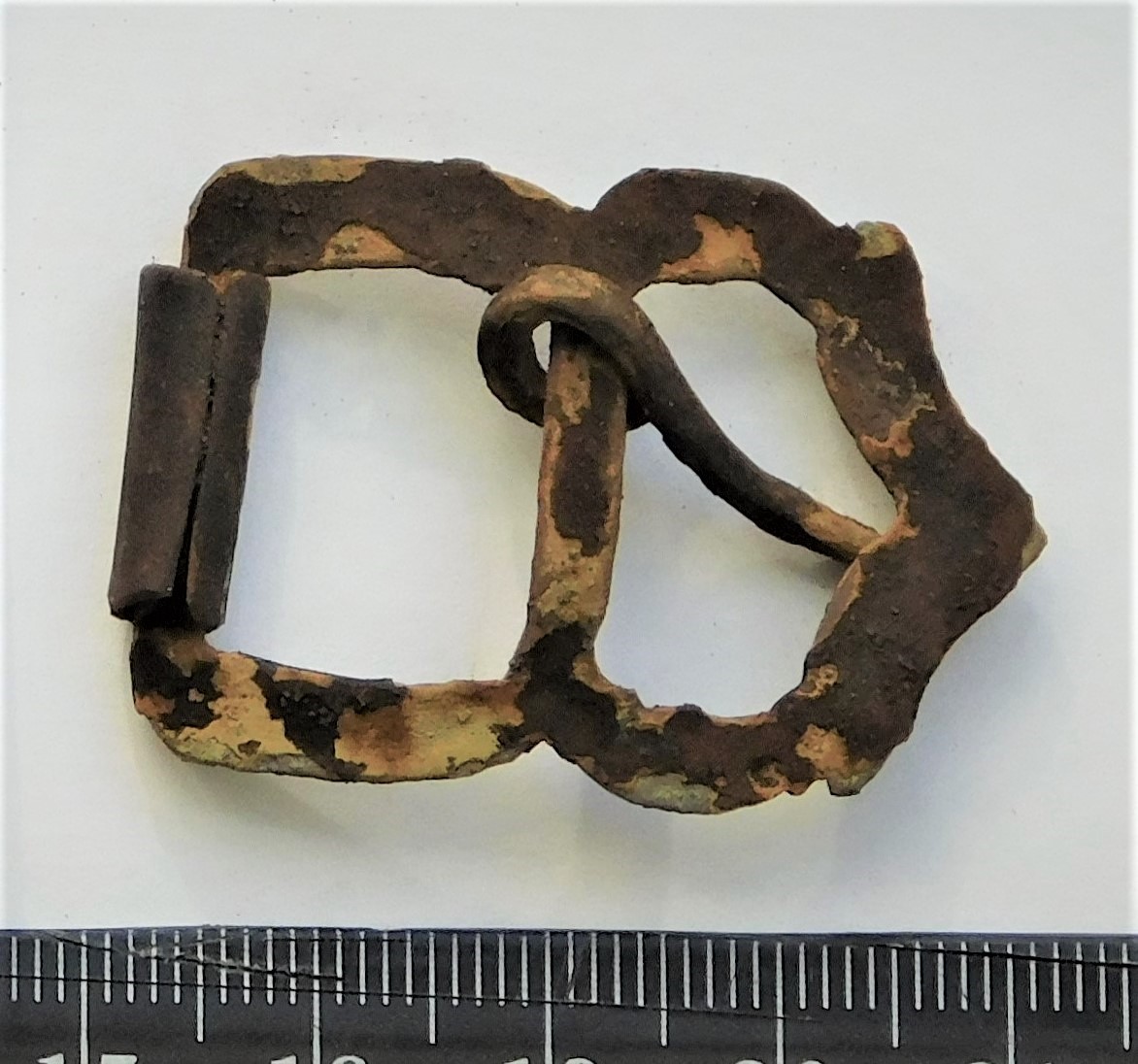
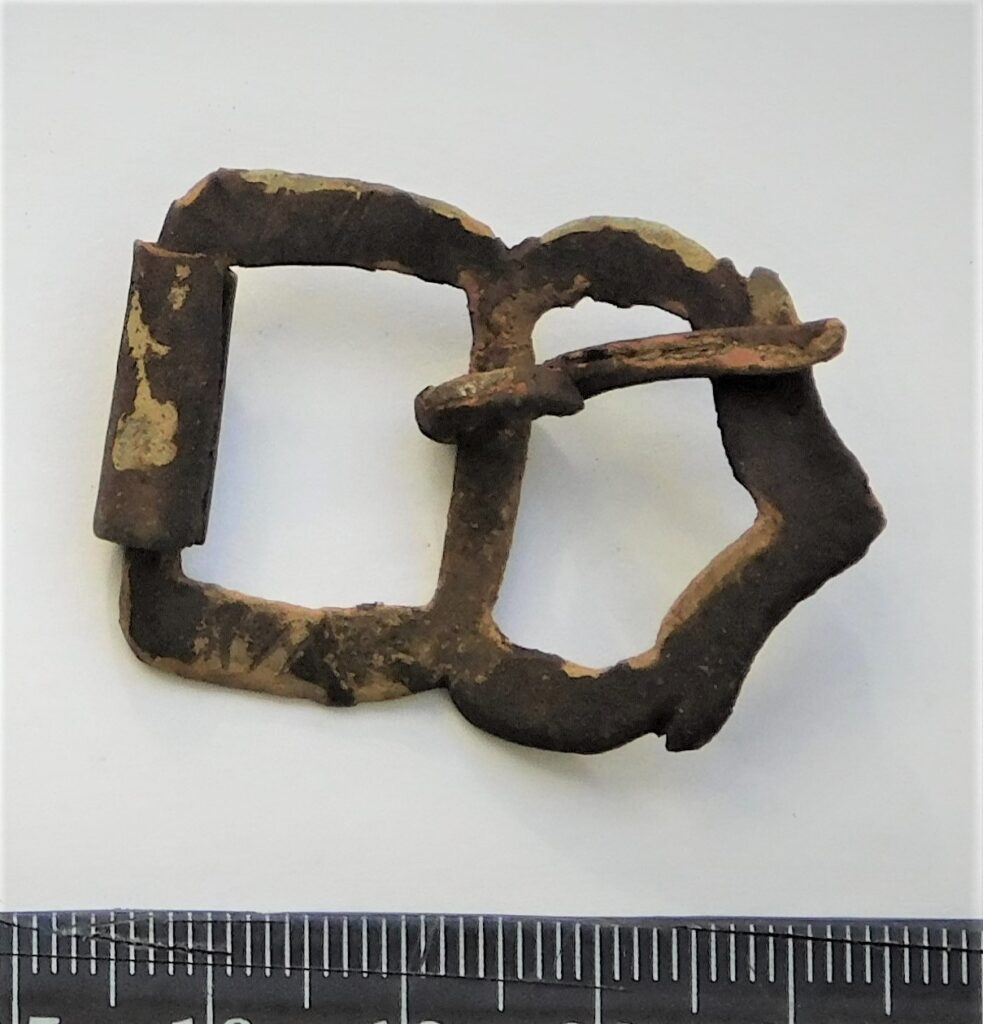
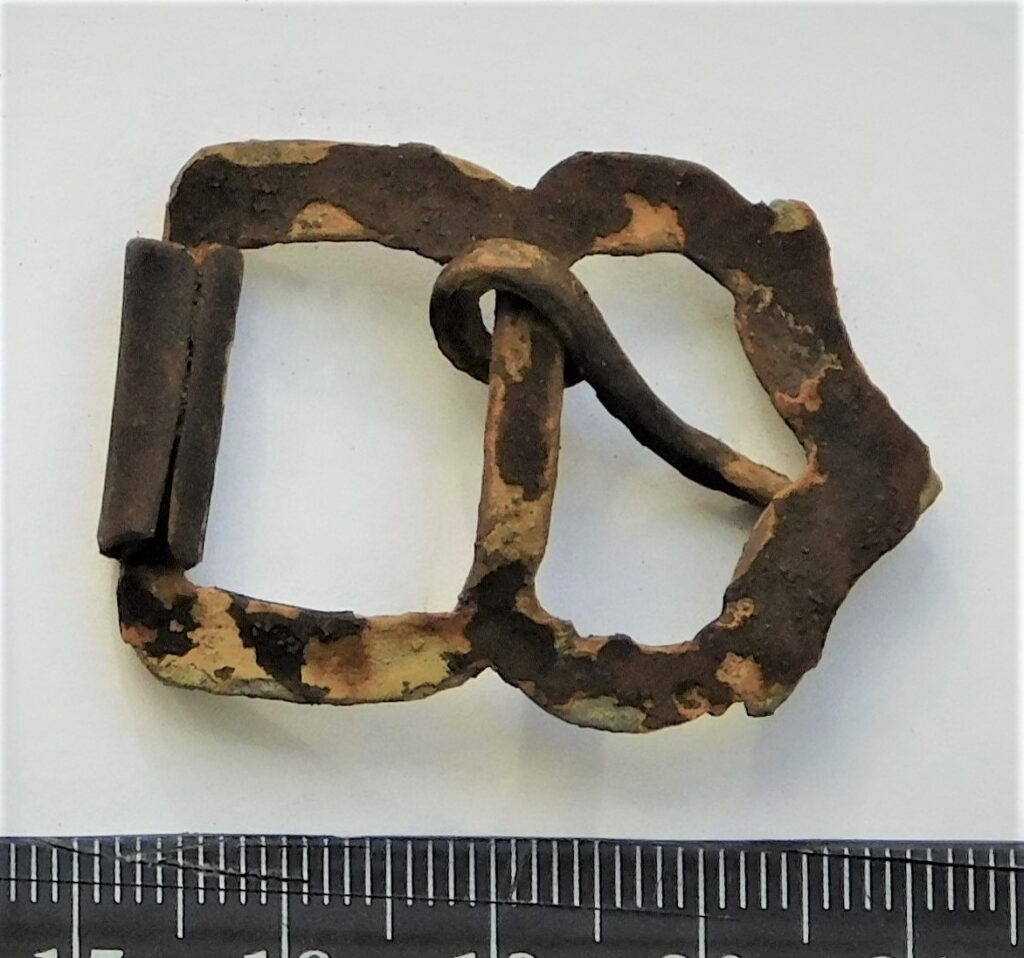
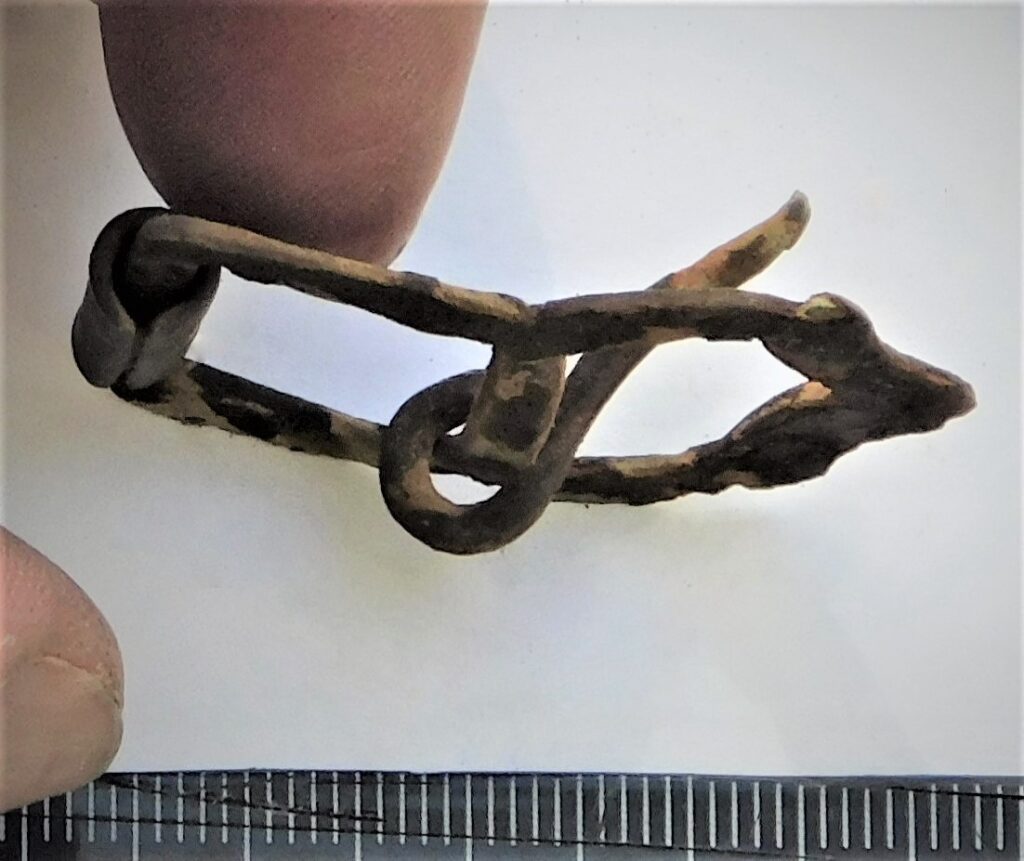
Buckle, bronze. Probably from the 13th century or later.
Valjala hillfort
Penannular brooch, silver (?). Knob-shaped terminals. The ring has grooved thicker middle part, transversely grooved.
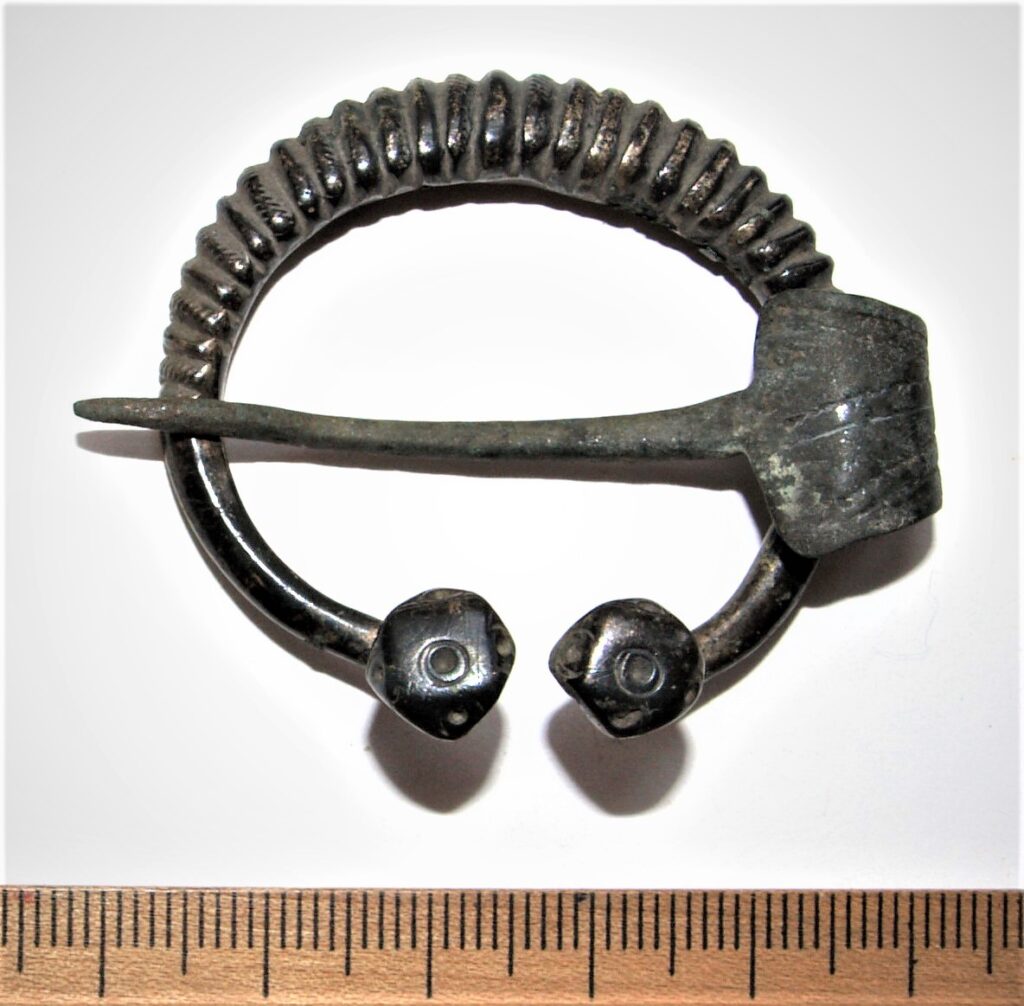
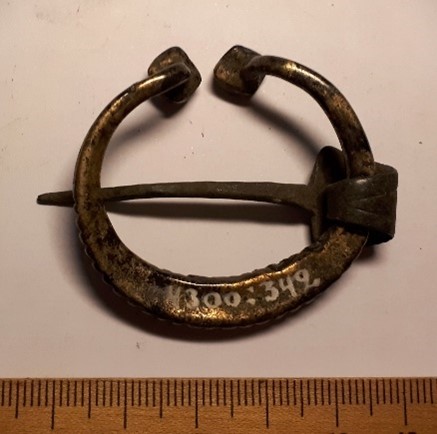
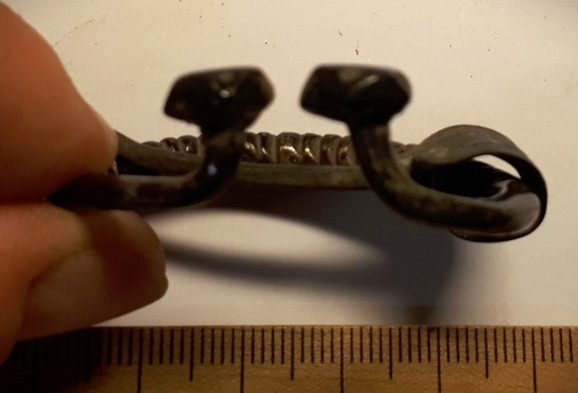
Penannular brooch, silver (?). Knob-shaped terminals. The ring has grooved thicker middle part, transversely grooved. Similar brooches are often found in 13th-14th-century inhumation graves and only seldom in stone graves with cremations. In Karja, such brooch was registered in an inhumation dated to the second half of the 13th century (Mägi 2002, Pl. 125: 1–2), but in Siksälä, South-East Estonia, they also occur in 14th-century graves (Valk et al 2014).
Literature:
Mägi, M. 2002. At the Crossroads of Space and Time. Graves, Changing Society and Ideology on Saaremaa (Ösel), 9th–13th centuries AD. CCC papers: 6. Gotland University College, Centre for Baltic Studies; Institute of History, Department of Archaeology. Tallinn, 2002. Loe raamatut: siin. Vaata arheoloogiliste leidude jooniseid: siin.
Valk, H., Ratas, J., Laul, S. 2014. Siksälä kalme II. Matuste ja leidude kataloog. Tartu Ülikool: Tartu.

